Philosophy of Steppe Thinking: “Uly Dala Academy” Opens at AlmaU
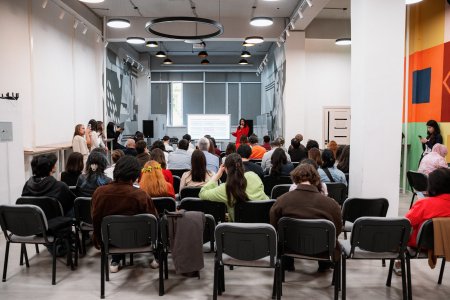
On April 24, 2026, Almaty Management University hosted the official opening ceremony of the “Uly Dala Academy” research center. The new intellectual platform, aimed at reinterpreting the heritage of steppe civilization in the context of contemporary global challenges, was established as an interdisciplinary space for dialogue bringing together scholars, educators, cultural figures, and public leaders.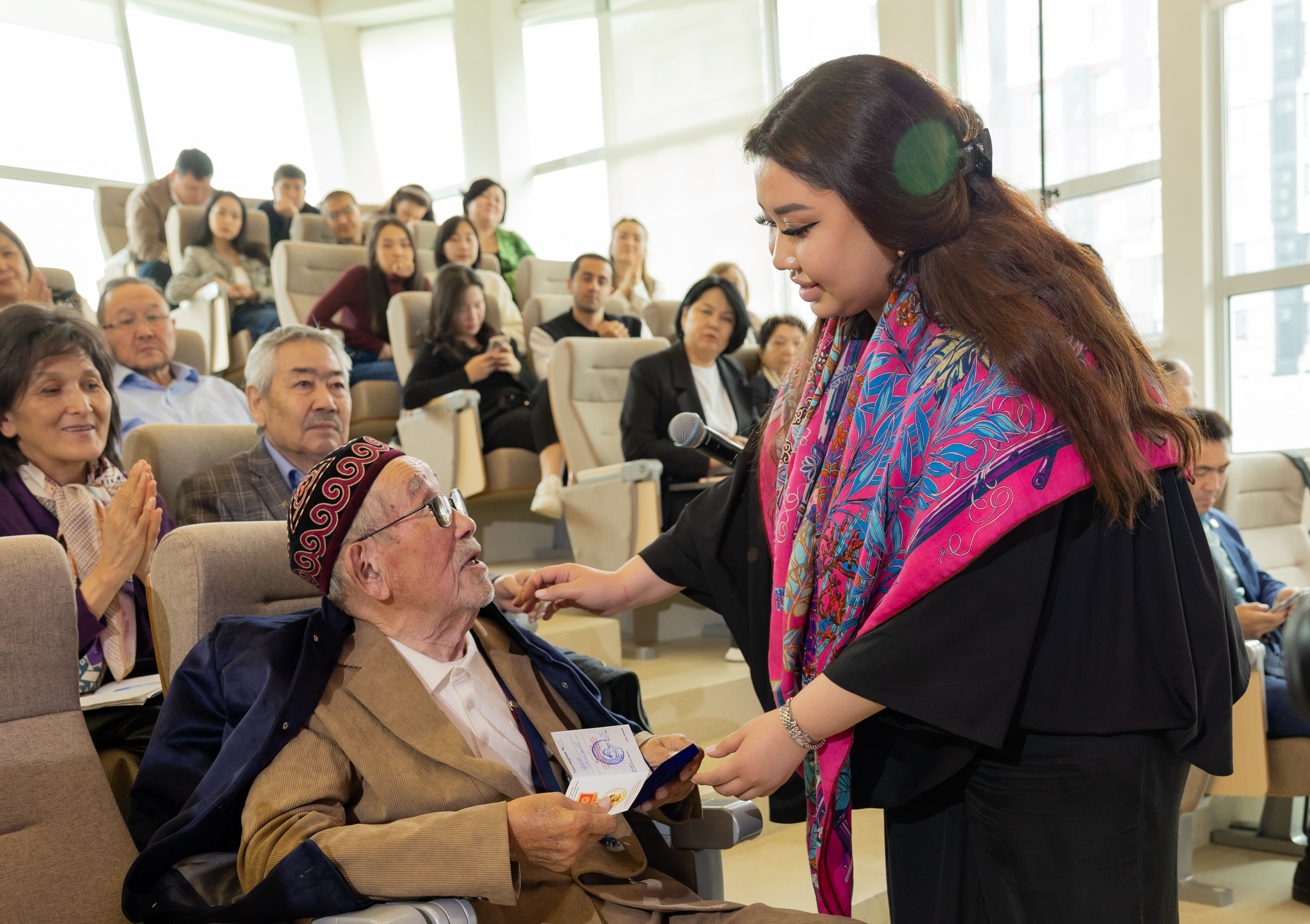
The event gathered academics, public figures, representatives of Kazakhstan’s scholarly community, and international experts. Participants included historians, philosophers, sociologists, anthropologists, lecturers, writers, and researchers from abroad.
Welcoming guests, AlmaU Founder and President Asylbek Kozhakhmetov emphasized the significance of the new center as a bridge between tradition and the future.
“AlmaU is the oldest private university in Kazakhstan and the country’s first business school. In our development strategy through 2028, we have set the goal of becoming the intellectual hub of Central Asia, with transformative humanities at the core of this vision. We do not duplicate state academic institutions; our mission is different. We transform cultural heritage into modern educational and social practice: academic programs, youth leadership, public dialogue, and creative industries,” said Assylbek Kozhakhmetov.
He noted that the academic community now faces a new challenge: not only to speak about the rich heritage of the Great Steppe, but to translate this legacy into the language of modern scholarship and turn it into an educational and intellectual resource for the future.
For this purpose, the activities of the “Uly Dala Academy” will be structured around three key research areas.
The first is Dalalyk Philosophia (“Steppe Philosophy”) — a holistic system of understanding the world and humanity’s place within it. The second is Dalalyk Oylau (“Steppe Thinking”) — viewed as a distinctive way of perceiving space, time, movement, and balance. The third is Dalalyk Baskaru (“Steppe Governance and Leadership”) — a historically formed model of social organization and leadership.
It was also noted that in the face of today’s environmental challenges, traditional attitudes toward land stewardship and ecological balance are gaining renewed relevance, while in an era of global instability there is increasing interest in societies that knew how to remain resilient while constantly in motion.
A special highlight of the program was the address by Chinara Aitmatova, granddaughter of the outstanding writer Chingiz Aitmatov. She emphasized the importance of humanitarian cooperation among the peoples of Central Asia, the spiritual heritage of the Turkic world, and the role of education in strengthening cultural ties across the region.
In recognition of their contributions to education, science, and international humanitarian dialogue, Chinara Aitmatova presented the Chingiz Aitmatov’s Medal to Orazak Smagululy, Assylbek Kozhakhmetov, Didar Amantay, and Zhumazhan Baizhuman.
“The opening of the Uly Dala Academy is not only the creation of a research center, but also a symbol of the revival of our shared historical memory. The legacy of the Great Steppe continues to live in the culture, values, and consciousness of modern generations. Today it is especially important to remember our roots, honor our ancestors, and recognize our responsibility to the future. In a rapidly changing world, the unity and integration of Turkic nations takes on special significance,” said Chinara Aitmatova.
During the ceremony, special tribute was paid to senior representatives of the academic community who have made outstanding contributions to national science, education, and the preservation of historical and cultural heritage. For his many years of dedicated service and distinguished academic achievements, scholar Orazak Smagululy received commemorative gifts and honors.
“My many years of research have shown that even genetic data can help trace the origins of the Kazakh people. There was a time when some denied the depth of our history due to a lack of written evidence. Today, however, the global academic community recognizes the antiquity of our roots. I am confident that the Uly Dala Academy will also become an internationally recognized center representing the rich heritage of the Great Steppe,” said Doctor of Historical Sciences, Professor, and Academician of the National Academy of Sciences Orazak Smagululy.
The event also featured the presentation of a new collection by historian and professor Zhumazhan Baizhuman titled “Turks: Origin and Historical Mission.” In addition, the scholar donated his five-volume work to the library of Almaty Management University.
One of the center’s key priorities will be the development of a new гуманities paradigm — the Philosophy of Steppe Thinking, which connects the historical experience of nomadic civilization with contemporary issues of leadership, governance, and social development.
Nurlan Kulumzhanov, Director of the “Uly Dala Academy” and PhD, presented the concept of Steppe Thinking.
“To formulate the methodology of the Steppe Thinking concept, it is necessary to establish its own categorical thesaurus. It is a cultural-philosophical system that reveals the balance among the key dimensions of the Turkic-Kazakh worldview: scale, space, path, land, settlement, qut, sacred power, and amanat,” he said.
The panel discussion addressed issues of identity, historical memory, cultural heritage, and the future of humanities. Participants included Kalnur Ormushev, Director of the Kyrgyz-Uzbek Society for Humanitarian and Economic Cooperation; Aigul Sadvakassova, Doctor of Sociology and Director General of the Institute for Philosophy, Political Science and Religious Studies; Zhumazhan Baizhuman, historian and professor at the Kazakhstan Academy of Sport and Tourism; Didar Kossylbekov, writer, screenwriter, journalist, and public figure; and Sholpan Ibzharova, Candidate of Philosophical Sciences and Associate Professor at the School of Social Sciences and Transformative Humanities, AlmaU.
“The concept of ‘Dalalyk Oylau’ is not a finished theory. It is a concept with great scientific potential and a promising future. In my view, the Uly Dala Academy and our university’s ‘Tolyk Adam’ program could merge into a major intellectual idea and become a modern educational model,” noted Sholpan Ibzharova.
Participants expressed their readiness to support the center’s activities, promote academic research, develop joint projects, and advance humanitarian knowledge. It was noted that such a platform creates broad opportunities to unite researchers of different generations and disciplines.
Particular attention was also given to semiotics, ancient Turkic writing, and runic heritage. Participants emphasized that runic texts preserve a vast body of knowledge concerning the worldview, language, history, and values of ancestors.
In conclusion, participants highlighted the importance of systematically studying the civilizational heritage of the Great Steppe and integrating humanities research into modern educational and international processes.
The opening of the “Uly Dala Academy” marked an important milestone for the academic community and a significant step forward in the study of the historical and cultural legacy of the Great Steppe in the context of the global challenges of the 21st century.
Похожие материалы: